Landscape lighting in Indianapolis, tucked into the stone
We light the walls, steps and paths we build. Every fixture is low voltage, and most of them hide under a wall cap or inside a step riser, so you see the glow and not the hardware.
- All low voltage
- Cap, step, path and uplights
- Planned with the hardscape
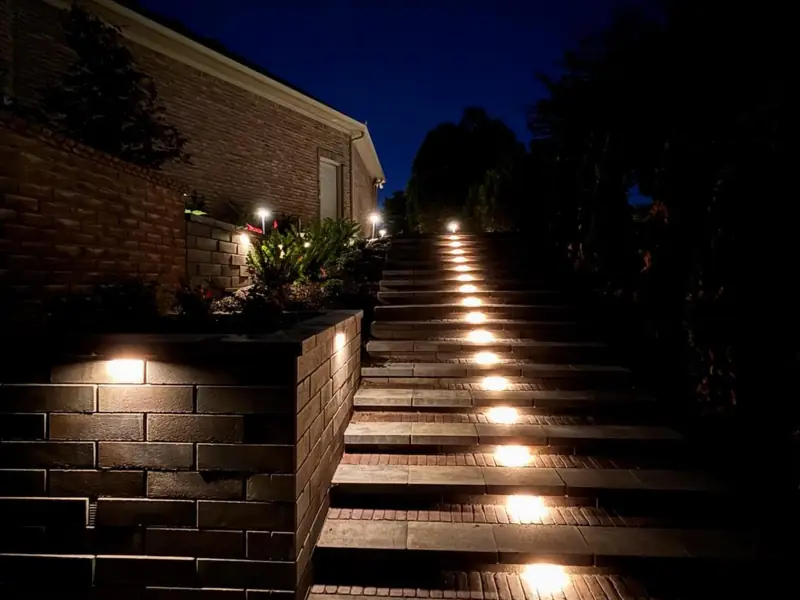
Light where your feet go, and where the eye goes
Most backyard lighting gets added after the fact: a box of solar stakes along the walk, a floodlight on the garage. Ours goes in while the patio and walls are still being built. That's the difference between lights stuck into a finished yard and lights that look like they belong to it.
We do it for two reasons, and homeowners usually mention both at the estimate. The first is looks. A sitting wall with a soft line of light under its cap turns a patio into a place you want to stay after sunset. The second is safety. Steps you can't see at night are steps somebody misses, and a lit path to the back door keeps the dark corners of the yard from feeling like a hiding spot.
The four kinds of light we install
Cap lights under wall caps
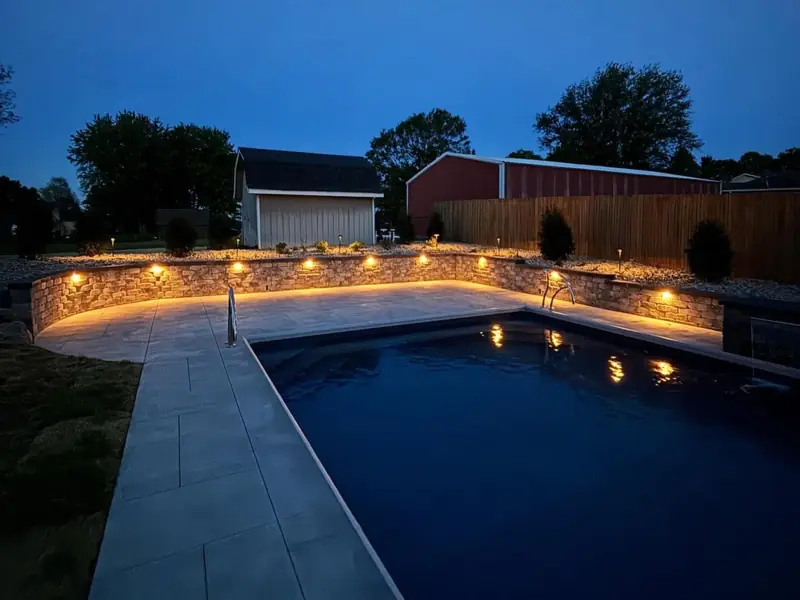
On a sitting wall, retaining wall or column, we tuck a light between the last course of block and the cap stone. The cap hides the fixture and throws the light down the face of the wall. The 6-inch size is the one we use most, and 12-inch and 24-inch versions are available when a long wall needs a wider wash.
Step lights in the risers
Each step gets a light set into its riser, so every tread is lit from just above. It's the single most useful light in a yard with grade changes, because it marks the edge of each step without shining in anyone's eyes.
Path lights
Low path lights along a paver walkway mark the route from the driveway to the back gate or from the patio to the garage. We place them in the planting beds beside the walk so they read as part of the landscape.
Uplights on the house and trees
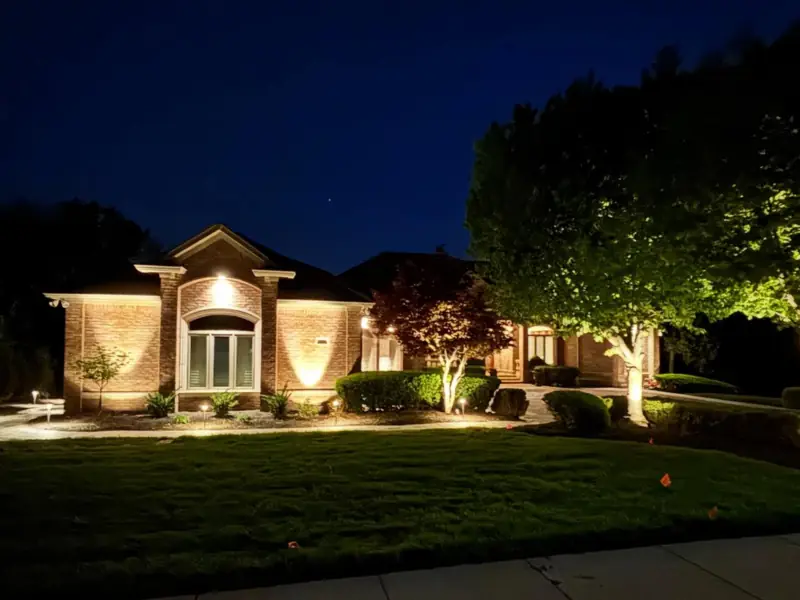
Uplights sit at the base of the house, a column or a tree and wash light up the surface. On the front of a home they show off the stone and trim and make the house easy to find at night.
| Light | Where it goes | What it does |
|---|---|---|
| Cap light | Between the last block course and the cap, 6, 12 or 24 inch | Washes the face of a wall or column |
| Step light | Set into each step riser | Marks every tread edge |
| Path light | In the bed beside a walkway | Lights the route between doors and patio |
| Uplight | At the base of the house, a column or a tree | Shows off the house and adds security |
How a lighting job goes in
- Plan it with the stone. At the estimate we mark which walls, steps and paths get light, so the wire runs are part of the drawing.
- Run wire during the build. Wire goes in before the caps are glued down and before the pavers are laid, which is why lighting is cleanest on a new hardscape.
- Set the fixtures. Cap lights under the caps, step lights in the risers, path lights and uplights in the beds.
- Walk it after dark. We look at it at night and adjust before we call it done.
Already have a patio or wall you'd like to light? We can add path lights and uplights to an existing yard. Cap and step lights are easiest when we're building the wall or steps in the first place.
Lighting questions
Yes, every light we install is low voltage. That's what lets us tuck fixtures under wall caps and into step risers.
The 6-inch cap light is the one we use most. For a long wall that needs a wider wash of light, 12-inch and 24-inch versions are available.
Path lights and uplights, usually yes. Cap lights and step lights go in while the wall or steps are being built, so on an existing wall it depends on how the caps were set.
Two reasons: it makes the patio usable and good-looking after dark, and it adds security. Lit steps and paths are safer to walk, and a lit house and yard are easier to keep an eye on.
Lights go best with
- Sitting walls and columnsThe best place for a cap light
- Retaining wallsLight the face, mark the steps
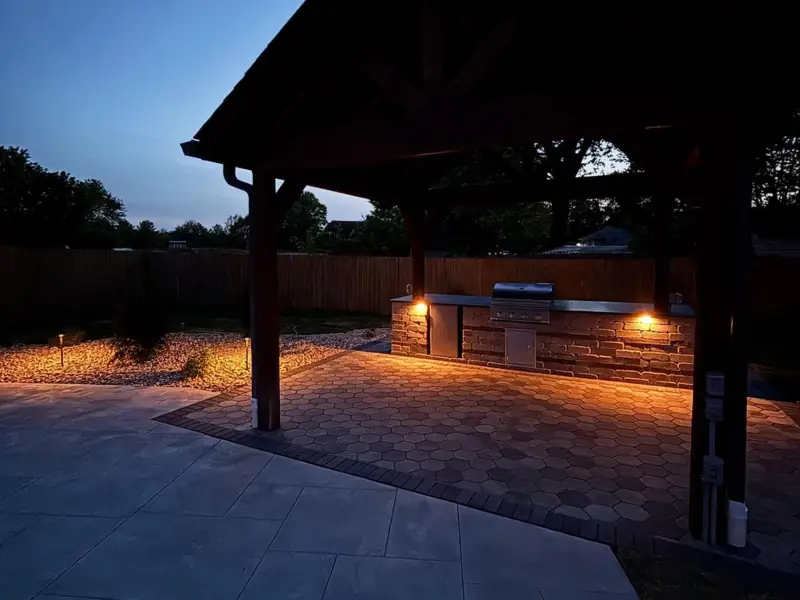
- Outdoor kitchensLight under the counter
We light yards all over the Indianapolis area. See the kind of homes we work on in Carmel hardscaping and Zionsville hardscaping, or check every town we work in.
Plan the rest of the evening
Want to see the patio after dark?
Tell us which steps, walls and paths you use at night. We'll plan the lights while we plan the stone, so the wire goes in before the caps go on.
- We get back to you within 24 hours.
- The estimate is free and itemized, so you can pick what to build now and what to save for later.
- Robb or Zach walks the yard with you, and the same family builds it.