What goes in paver joints? Polymeric sand, and why it isn't mortar
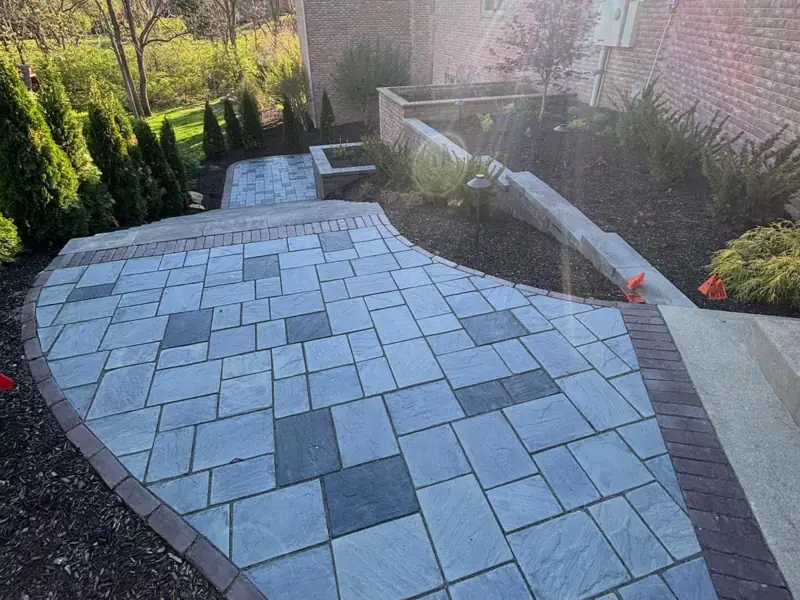
Polymeric sand. We sweep it into the joints dry, then mist it with water so it sets up firm but stays flexible. It moves with the pavers through freeze and thaw, where mortar would crack and pop out. It comes in tan, beige, gray and sometimes black, and we match it to your paver.
It's the question we hear most at the estimate, usually while the homeowner is crouched down looking at a sample paver: "What goes in between them?" Here's the full answer.
What polymeric sand is
Polymeric sand is fine sand with a binder mixed in. Dry, it pours and sweeps like ordinary sand. Once it gets wet, the binder activates and the sand firms up in the joint. It stays a little flexible after it sets, which is the whole point: the joints lock the pavers to one another without turning the patio into one rigid sheet.
How we put it in
- Pavers set and compacted. The patio is laid and run over with a plate compactor so every paver is seated.
- Swept in dry. We sweep the sand across the surface until the joints are full.
- Surface cleaned off. Loose sand comes off the paver faces so it doesn't set where it shouldn't.
- Activated with water. A light misting sets the binder, and the joints firm up.
Why we never use mortar between pavers
Mortar dries hard and rigid. Indiana winters freeze and thaw the ground over and over, and a patio has to move with it. Rigid mortar can't, so it cracks and pops out of the joints, and then water gets in underneath. Polymeric sand flexes with the pavers instead.
Polymeric sand
- Swept in dry, set with water
- Firm but flexible once set
- Moves with the pavers through freeze and thaw
- Colors matched to the paver
Mortar
- Mixed wet and troweled in
- Rigid once cured
- Cracks and pops out when the patio moves
- Lets water in once it breaks loose
Picking the joint color
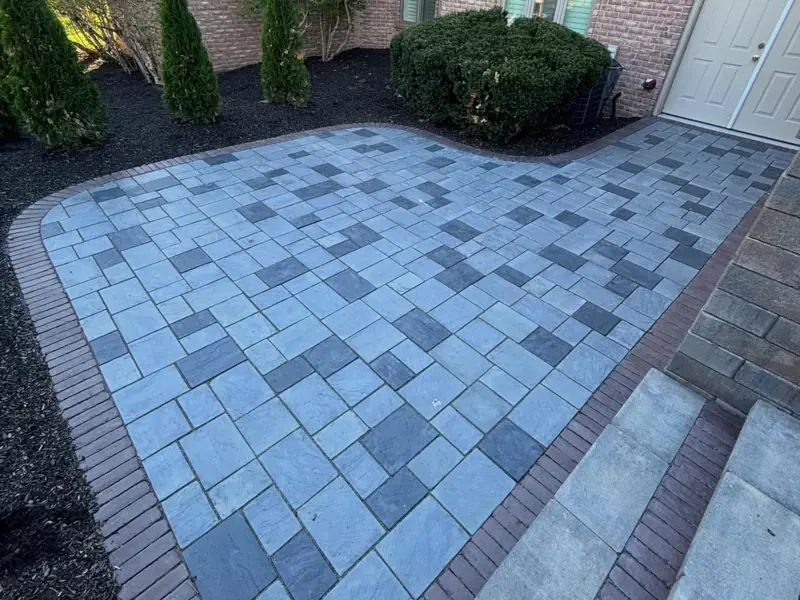
Polymeric sand comes in beige or tan, gray, and sometimes black. We choose it to match the paver, so the joints disappear into the pattern instead of outlining every stone.
Sometimes matching takes some work. On a porcelain patio we built in Westfield, the homeowner wanted a joint color that the usual polymeric sand doesn't come in. The first product wasn't right and neither was the second. The third one finally matched, and that's the one in the joints today. We'd rather try three products than leave a joint color you don't like. See more of what we build in Westfield backyards.
How long it lasts
The joint sand is the one part of a paver patio that wears with time. Rain, snowmelt and sweeping slowly work at the top of the joints. We warranty the sand for one year, and most patios need a fresh sweep of polymeric sand somewhere in the five-to-seven-year range. The pavers themselves carry our lifetime warranty.
Polymeric sand questions
Expect a re-sanding somewhere around year five to seven. Our warranty on the sand itself is one year.
Beige or tan, gray, and sometimes black. We pick the one that matches your paver.
Yes. Our porcelain patio in Westfield is set with it, after we tried three products to get the joint color the homeowner wanted. More on that material on our porcelain and natural stone patios page.
The joints are one step in the build. See the whole process on our paver patio installation page.
From the joints out
Joints washing out, or starting fresh?
Tell us about the patio. If it's a new one, we'll bring samples of the pavers and talk joint color at the same visit.
- We get back to you within 24 hours.
- The estimate is free and itemized, so you can pick what to build now and what to save for later.
- Robb or Zach walks the yard with you, and the same family builds it.