Porcelain and natural stone patios in Indianapolis
When pavers aren't the look, we build with large porcelain slabs or real flagstone. The stone gets the attention, but the joints and the base decide whether it still looks right in ten years, so we sweat both.
- Porcelain slabs
- Natural flagstone
- Joint color matched to the stone
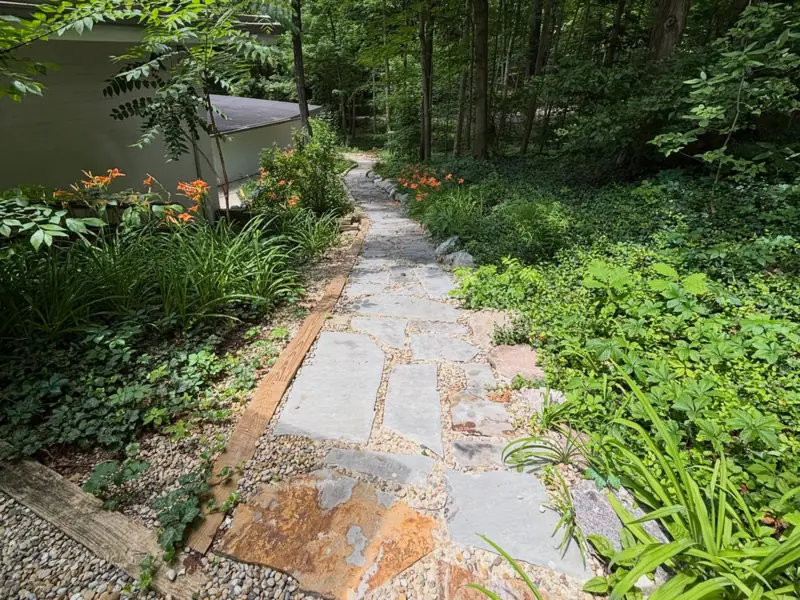
Two materials, two very different looks
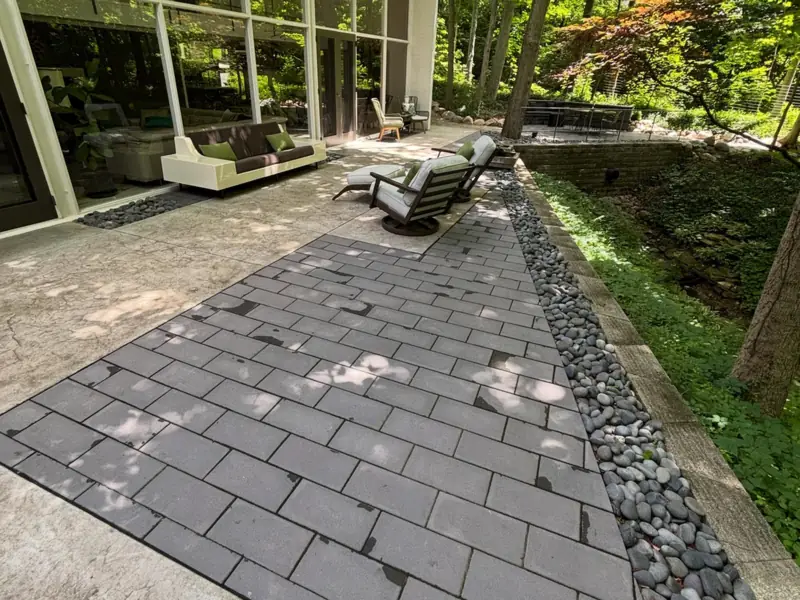
Porcelain pavers are thin, dense slabs made for outdoor use. They come in big formats with crisp edges and very even color, and they can look like stone, wood or polished concrete. A porcelain patio reads clean and modern, and the large slabs mean far fewer joints than a paver patio.
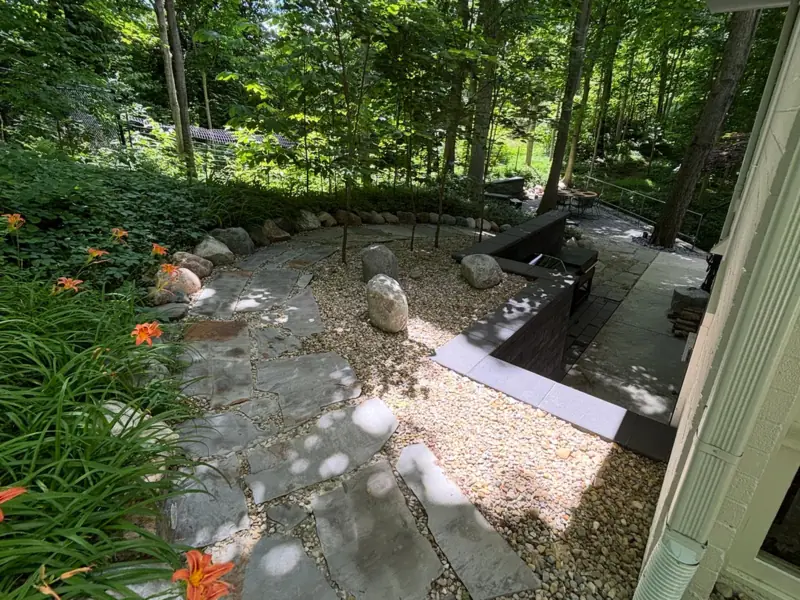
Natural flagstone is the opposite: every piece is a different shape, thickness and color, cut from real stone. Flagstone looks like it has always been there. It suits wooded lots, garden paths and older homes, and it pairs well with boulders and planting beds.
Both take more care to install than standard pavers. Porcelain slabs have to be set dead flat because every high corner shows. Flagstone has to be fitted piece by piece, like a puzzle with no picture on the box.
How the three surfaces compare
| Porcelain slabs | Natural flagstone | Concrete pavers | |
|---|---|---|---|
| Look | Clean, modern, even color | Irregular, natural, every piece unique | Wide range of shapes, colors and textures |
| Joints | Few and straight | Many, wide and irregular | Regular, tight, with a border course |
| Install | Must be set perfectly flat | Hand-fitted piece by piece | Laid in a pattern on a compacted base |
| Fits best | Modern homes, pool surrounds | Wooded lots, garden paths | Most patios, walkways and steps |
If you're still deciding, our paver patio installation page covers the third option.
What goes under porcelain and flagstone
The base work starts the same way as any patio we build: dig out, bring in base stone, and compact it in layers so the ground won't shift. What changes is the bed the stone sits on and how it's leveled. Porcelain needs a perfectly flat setting bed and careful leveling at every corner. Flagstone pieces vary in thickness, so each one gets set to its neighbor by hand until the surface walks smoothly. We talk through which setting method fits your stone when we're at the house, because the right answer depends on the slab or stone you choose.
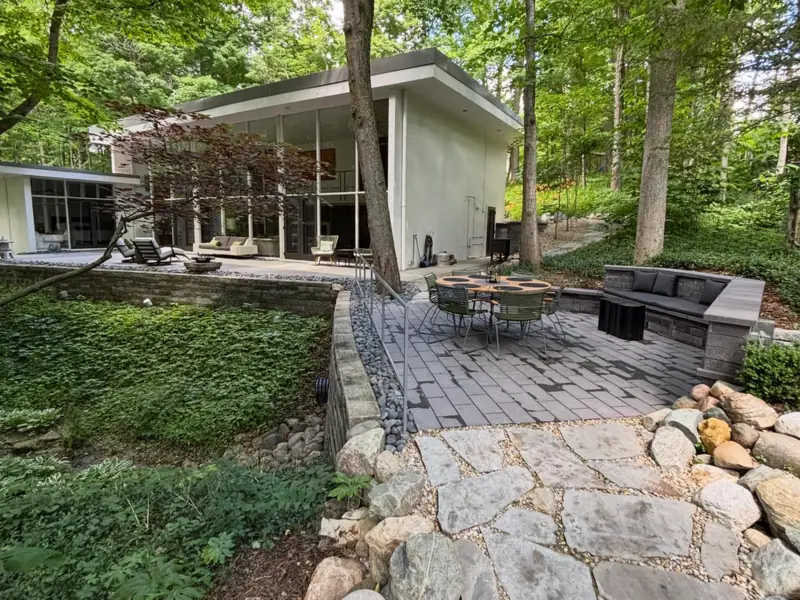
The joint color is part of the design
With porcelain, the joints draw a grid across the whole patio, so their color matters as much as the slab. Polymeric sand comes in a handful of shades, usually tan, beige and gray, sometimes black, and we pick the one that disappears into the stone or frames it on purpose.
On one porcelain patio in Westfield, the homeowner wanted a grout color that polymeric sand simply didn't come in. We didn't talk them out of it. We tried one product, then a second, and the third one finally matched the color they had in mind. That's how we handle the details on a porcelain job: the patio should look the way you pictured it, not the way the first bag of sand happened to come out. If you live up that way, we've written more about our hardscaping work in Westfield.
Flagstone joints can be filled with polymeric sand for a tight, finished look or with gravel for a looser garden feel that drains through. Both look right; it depends on how formal you want the space. Our guide to polymeric sand in paver joints explains how the sand sets up and why we never use mortar.
The stone gets the compliments. The joints and the base are what we're thinking about.How we approach every porcelain and flagstone job
Pairing stone with the rest of the yard
Natural stone and porcelain mix well with other work. A wooded yard might get a flagstone path down to a paver patio, boulders along the edges, and a curved sitting wall around the seating. A porcelain pool surround can tie into a waterfall wall or an outdoor kitchen. We build across Indianapolis and the towns around it; see every town we work in.
Porcelain and stone questions
Outdoor-rated porcelain comes in textured finishes. Finishes vary, so we bring samples to your house and you can feel the texture before you choose.
We'll do our best, and we've gone through three products on one job to get it right. Polymeric sand comes in a limited range of colors, so we'll tell you up front how close we can get.
Polymeric sand gives a tight, finished look. Gravel gives a softer garden look and lets water drain through. We'll show you both and build the one that fits the space.
Other ways to finish the yard
Still deciding on the surface?
Bring us the look you have in mind
Show us a photo of the porcelain or stone you like, and we'll bring samples and talk joint color at your house.
- We get back to you within 24 hours.
- The estimate is free and itemized, so you can pick what to build now and what to save for later.
- Robb or Zach walks the yard with you, and the same family builds it.